Product Detail

General Introduction

Celutriator is a fully automated rare cell enrichment system specifically engineered for clinical samples. Its label-free microfluidic technology requires no antibodies nor centrifugation, maintaining full cell viability and biological function.

One of the key innovative features is the integration of a reusable microfluidic chip as a permanent internal component of the system. This design reduces long-term operational expenditure and mitigates the inter-batch performance variability associated with disposable chips. The system's whole-blood processing capability enables one-click sample-to-result operation with no dedicated technical personnel needed, making it ideal for rapid clinical cell sorting applications.
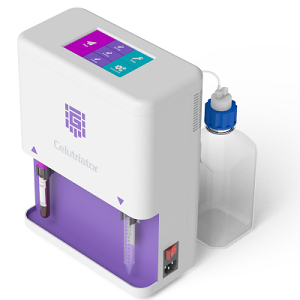
Celutriator Device

Principle

The core sorting module μFCPU (Microfluidic Cell Processing Unit) integrated into Celutriator leverages the latest breakthrough from the original research team that pioneered a serials of spiral inertial microfluidic technologies. With an unprecedented sorting throughput of 10⁸ cells per second (cps), it enables Celutriator to process 7.5 mL of whole blood in just 10 minutes.

The μFCPU is fabricated using our proprietary LMAC process. Constructed from highly stable materials, the module contains no irreversible modifications, allowing for long-term repeated use.

Celutriator Principle

Advantages

  • Label-free: No antibodies or magnetic beads, preserves cell function
  • Closed-tube processing: Eliminates operator exposure to clinical samples
  • ≥99% cell viability: Gentle, non-damaging native sorting
  • 10-minute processing: 7.5 mL whole blood, industry-leading speed
  • One-click automation: No specialized technical expertise required
  • Zero chip consumables: Superior consistency, lowest cost of ownership
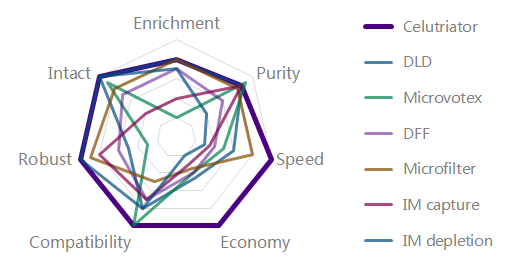
Compare of Celutriator and others

Applications

  • Rare cell enrichment (CTCs, CTBs, CTC clusters) from peripheral blood for expansion, organoid culture, and single-cell sequencing
  • Body fluid sample processing: pleural effusion, ascites, CSF, and urine
  • Large-scale liquid biopsy for early cancer screening and subtyping
  • Translational research, companion diagnostics, and technology development
  • CTC enrichment and depletion in preclinical animal models
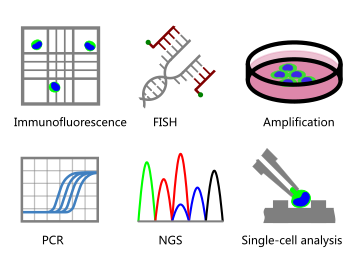
Celutriator Application

Use Cases

1. Using the Celutriator to CTCs from multiple breast cancer patients, perform single-cell transcriptomic analysis and in situ expression profiling, to identify a unique tumor cell subpopulation and uncover potential therapeutic targets for breast cancer treatment.

2. Clinical validation demonstrated that fetal circulating trophoblasts (CTBs) could be successfully obtained from the peripheral blood of 86.67% of 30 pregnancy cases using the Celutriator. Single-base variants in the HBB gene could be accurately detected by sequencing these rare CTBs.

3. By leveraging the Celutriator isolation and enrichment and enrich CTCs from CDX mouse models, potent inducers of CTC senescence could be screened and identified to elucidate the mechanisms underlying CTC senescence promotion, apoptosis induction, and melanoma metastasis inhibition, and explore potential novel therapeutic strategies for metastatic melanoma.
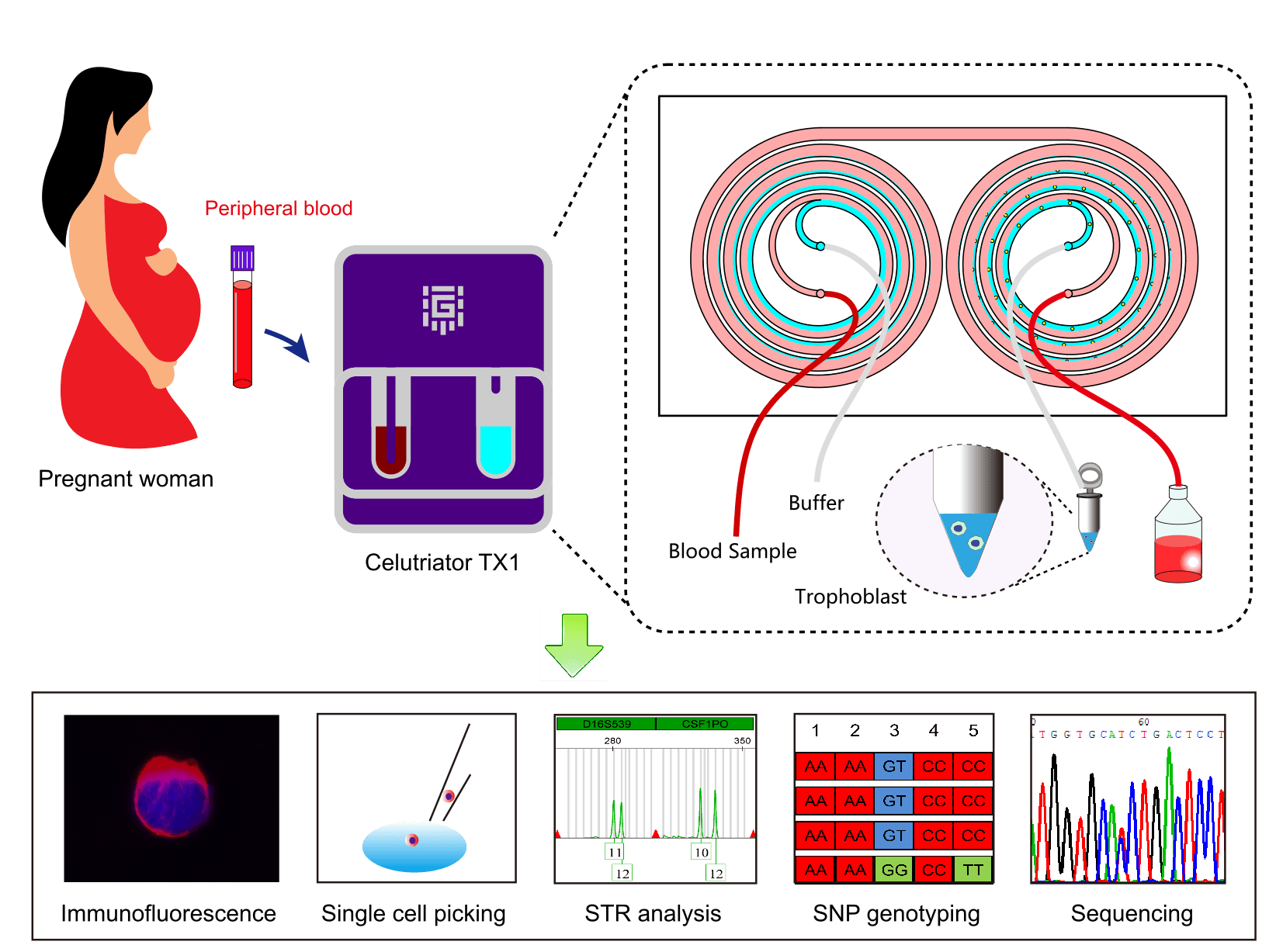

Celutriator Representative

Publications

1. Yifang Huang, Sheng Yu, Shuzhe Chao, et al. Isolation of Circulating Fetal Trophoblasts by a Four-Stage Inertial Microfluidic Device for Single-Cell Analysis and Noninvasive Prenatal Testing. Lab Chip (2020). DOI: 10.1039/D0LC00895H
2. Jianyang Hu, Binyu Zhang, Junhao Chen, et al. Cortactin Suppresses mTOR-Dependent Senescence in Circulating Tumor Cells. Cancer Res (2026). DOI: 10.1158/0008-5472.CAN-25-1175
3. Xiaohui Wu, Yiyi Zhou, Jie Chen, et al. A High-throughput Photothermal Aptasensing Platform Using MnO₂@CuS Nanoprobes for Noninvasive Detection of Bladder Cancer Cells in Simulated Liquid Biopsy. Microchim Acta (2026). DOI: 10.1007/s00604-025-07784-9
4. Xuefei Liu, Jun Tan, Chun Wu, et al. GPNMB Drives Brain Metastasis by Sculpting a Pathological Endothelial-Immune Interactome. Cancer Discov (2026). DOI: 10.1158/2159-8290.CD-25-1663
5. Yixin Cheng, Guanyin Huang, Xuefei Liu, et al. Fusion of Tumor Cells with Lipid-Associated Macrophages Drives Metastatic Progression of Breast Cancer. Cancer Res (2026). DOI: 10.1158/0008-5472.CAN-25-0261
6. Junhao Chen, Jianyang Hu, Jiapeng He, et al. Fangchinoline Suppresses Melanoma Metastasis by Inducing Senescence of Circulating Tumor Cells. Biomed Pharmacother (2025). DOI: 10.1016/j.biopha.2025.118770